
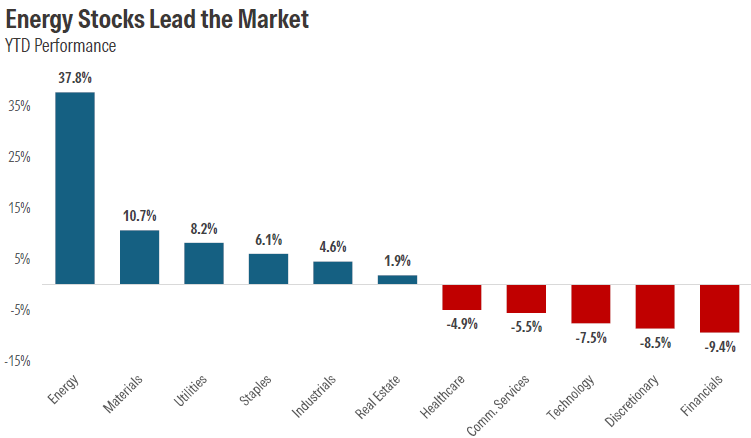
Unsurprisingly, the US–Iran conflict has pushed energy prices sharply higher amid concerns over oil supply disruption. Brent crude has risen from $58 per barrel at the start of the year to $88 at the time of writing; a 53% increase. Energy equities have benefited accordingly, returning 37.8% year-to-date and leading broader market performance. This has been driven by a rotation of capital toward short-term, sentiment-driven price movements rather than underlying valuations. As a result, previously favoured sectors, like Technology, fell out of favour, at least in the short-term.
This short-term shift; away from technology and toward energy, led to a sell-off in predominantly US large-cap growth stocks, creating a growing disconnect between market prices and intrinsic value. Microsoft is a clear example. For the first time since June 2015, its shares are trading at a discount to the broader US market.
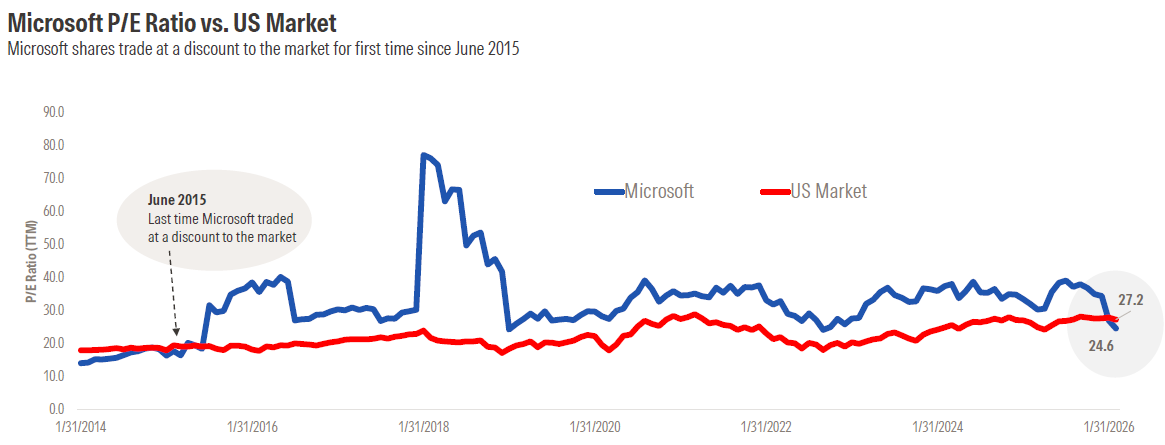
The last time this occurred, the stock went on to significantly outperform the market over both the short- and long-term.

Importantly, this is not a business in decline. Microsoft has guided to 16% revenue growth and 15% earnings growth for the quarter. If delivered, it is difficult to see how the market can continue to justify the current relative valuation discount. That said, short-term market movements are inherently unpredictable. The key point is that recent volatility has been driven more by weakening sentiment than by any meaningful deterioration in underlying business fundamentals.
Microsoft is a top 5 equity holding in both the Balanced and Growth funds.